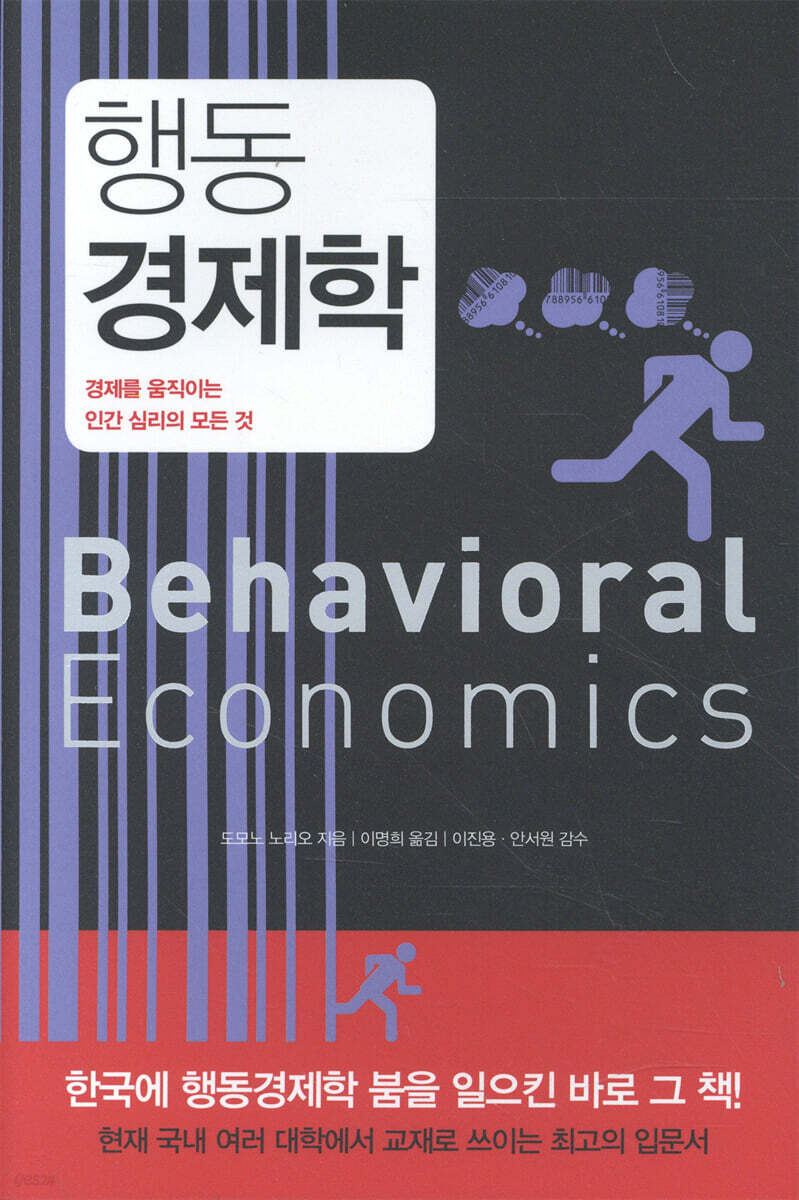

Behavioral Economics
The normative, prescriptive declaration of Homo economicus falls short when it comes to interpreting what actually happens in the real world. Behavioral economics returns to the original spirit of economics in Adam Smith’s day and once again sheds light on human behavior as a discipline of choice. Naturally, all that humans possess is limited information and bounded rationality. But that does not mean these are humanity’s limitations or imperfections. On the contrary, they may well be the best possible choices made within the constraints of reality. This chain of reasoning leads to the greatest question in the social sciences: the birth of society. Is the formation of society even possible for Homo economicus? In particular, a society based on reciprocity? Could it be that irrational human behavior is precisely the starting point for the formation of society? There were scholars who pursued these questions all the way down to neuroscience, and although the specific process remains unknown, the data suggest that altruistic irrationality was exactly what proved decisive in helping society form. They go so far as to make the rather moralistic claim that if people feel satisfaction from altruistic behavior, then they must be experiencing a utility even greater than something like monetary value. They even argue that social groups which express such irrationality at the genetic level won out in competition between groups and thus spread their genes more widely. The genetic-level capabilities that appear to aid the formation of society are truly astonishing: humans are said to innately possess the ability to detect traitors. And with remarkably high accuracy at that. I would rather not say that physiognomy is a science, but neither should we readily dismiss what people commonly call a “bad gut feeling” simply on the grounds that it is irrational. And if the ability to detect traitors is one of humanity’s innate capacities, then might not someone be especially gifted at it? How astonishing.
| Behavioral Economics: Everything About the Human Psychology That Moves the Economy [New Cover Edition] / by Norio Tomono, translated by Lee Myung-hee, supervised by Lee Jin-yong | Jihyung | January 2, 2007 |
20250222

Leave a comment