
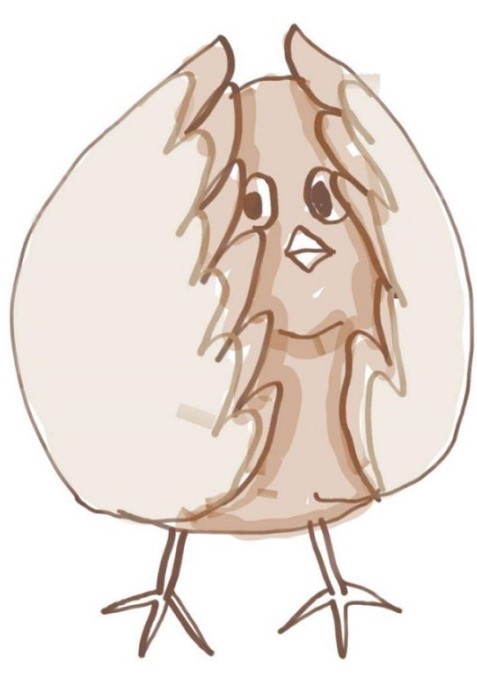
Gorgo, the Wolf Girl
Some stories provoke an immediate response. It doesn’t take much for a story to have that effect: the weak defeating the strong, an enormous war, overwhelming martial prowess, the tragic beauty of courage and sacrifice, and a single stratagem that turns the tables. Am I describing the typical repertoire of a martial arts novel? No. I’m describing Herodotus’s “Histories,” which deals with the ancient Greco-Persian Wars. It may seem preposterous, but it’s a true story.
This book deals with that very event. Naturally, it can’t help but be entertaining. What’s more, for the past 25 years, author Tom Holland has shown an exceptional talent for bringing historical events to life in a way that’s more entertaining than fiction. The illustrations, too, are extraordinarily beautiful. Success seems all but guaranteed.
Unfortunately, however, this book fell short of expectations. I don’t mean that it isn’t entertaining. I mean that my expectations were excessive. And so I found myself, once again, reassessing Herodotus, the original author of the story of the Persian Wars.
At first glance, Herodotus seems to lay out rambling, disorganized stories in a scattered fashion. This was regarded as the trial and error of an age when the discipline of history did not yet exist. But there is a grandeur to Herodotus’s narration, because you can feel the sheer vastness of the Persian Empire. It comes from the sense of space arising out of the trivial little tales of each of the countless peoples scattered throughout the world under the empire’s rule.
Perhaps Herodotus’s characteristically sprawling style of narration had precisely this kind of intention behind it?
20240710
Leave a comment