
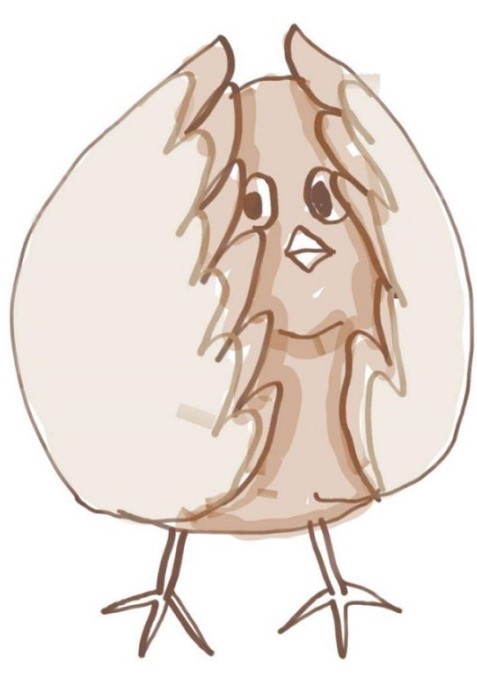
Where Did Violence Come From
At moments that call for a decision, there are people who tell us what is right or how we ought to act. Hegel, Rawls, Bentham, and others are thinkers who tackle difficult ideas. And to develop their arguments, they always make one assumption. How was humanity’s very first society formed? Each of them makes a persuasive assumption, but I have always had a doubt: how can anyone be so sure about that?
According to the theory of evolution, the ancestors of humankind share a common ancestor with today’s primates. If so, then by studying present-day primates and the societies they have built, we may be able to discover how humanity’s ancestors lived, as well as understand the way modern humans live today, and in particular trace the origin of our endless conflict and fighting. This book starts from that idea.
According to research findings in primatology and social ecology, the society that primates form, or whether they form a society at all, depends on food, sex, and predators. Depending on these three conditions, chimpanzees, gorillas, and lemurs each live their own kind of life. Remarkably, the same is true of humans. Consider the family, probably the very first social organization humans created. Humans formed families to avoid incest, shared food within the family unit, and protected one another from predators.
When we look at hunter-gatherer societies with this assumption in mind, it fits astonishingly well. Before agriculture began, hunting and gathering were humanity’s way of surviving for tens of thousands of years. From this we can guess what humanity’s first society looked like: a tribe of around 150 people, with the family as its basic unit, sharing food and bound together through marriage.
But once settled life began for the sake of agriculture, it became impossible to back down from conflicts between tribes; as individuals began to feel a sense of belonging to their group through language, war began. The book argues that the unending fighting bred grudges and revenge, until at last it never came to an end. And this eternal fighting became a feature distinctive to humankind alone among all living things.
By nature, I am someone who prefers science to philosophy, and I easily grow tired of philosophers developing their arguments without any empirical evidence. For that reason, I could not help finding this book quite fascinating. What on earth did the first humans see? What decisions did they make that turned this world into what it is? I like this book, but there were a few doubts I could not shake off.
First, is the assumption of peaceful hunter-gatherers really correct? Through studies of hunter-gatherers who survive to this day, such as the Bushmen, people say that in the era when humans were hunter-gatherers there was no conflict. But there are also many arguments that directly refute this theory. Books such as “The Better Angels of Our Nature” and “War Before Civilization” claim that the further back into the distant past, when laws and institutions were not in place, the more casualties there were from conflict. And they backed this up with more data.
Second, unlike the meticulous discussion of primates, the discussion of humankind is extremely bold. It looks less like a demonstrated argument than a kind of declaration. The irony that humankind, the most studied primate of all, is in fact harder to observe than any other primate is unfortunate. Perhaps this is why claims about the origins of human society are so varied.
Despite the doubts above, I like this book. Being a book for a general audience, it also reads easily. How on earth did the human world end up like this, and is there no way to solve it? This book tries to unravel that question with a wonderful approach. No matter how rigorous a philosophical discussion may be, is there any method better than seeing and observing for oneself? I recommend it to those who are weary of endless armchair theorizing.
Juichi Yamagiwa. 2015. Where Did Violence Come From. Translated by Han Seung-dong. Gom Publishing.
20190926
Leave a comment