Analysis of the Japanese Army Unit Stationed at Eomda-ri, Hampyeong, and US Air Force Air Raids in the Final Phase of the Pacific War
Analysis of the Japanese Army Unit Stationed at Eomda-ri, Hampyeong, and US Air Force Air Raids in the Final Phase of the Pacific War
The book [Are There Really That Many Traces of the War of Aggression Here in the Gwangju and South Jeolla Region?] unfortunately did not cover the subjects I was interested in. So I investigated them myself.
- The military unit stationed at Eomda Elementary School in Eomda-myeon, Hampyeong-gun
- Detailed records of the US military’s strafing attacks on Hampyeong-gun
I compiled the following after researching the historical sources.
Research on Historical Sources Regarding the Military Unit Stationed at Eomda Elementary School in Eomda-myeon, Hampyeong-gun
Background
Terrain and Transportation
- At the time, Eomda-myeon in Hampyeong-gun lay at the center of a plain where the Gyeongjeon Line between Mokpo and Gwangju (the old Hakgyo Station) and National Route 1 intersected.
- To secure “rear assembly points (集結所),” the Imperial Japanese Army preemptively occupied spacious grounds such as schools, township offices, and temples and used them as barracks.
- In particular, the 150th Division, hastily organized between April and June 1945, used the schoolyards of elementary schools in each township as temporary garrisons due to a shortage of buildings.
The 150th Division’s Western Coastal Defense Line in Jeolla
- Orders were given to construct a continuous line of positions linking ▸Mokpo ▸Hampyeong ▸Jangseong ▸Gochang (Mujang/茂長) along the expected axis of an amphibious landing on the West Sea (Mokpo–Gwangju–Naju).
- The 430th Regiment (Mokpo) and 431st Regiment (Daecheon-ri/大川里) kept only their regimental headquarters in the respective areas, while deploying densely in dispersed company and platoon units. The company at Eomda Elementary School was one such branch.
Main Missions
- Preparing delaying operations such as digging air-raid shelters, building pillboxes, and laying anti-personnel mines
- Defending railway supply routes and training for rapid movement by train
- Camouflage to evade US aerial reconnaissance (dispersing ammunition in classrooms and gymnasiums)
Japanese Sources
| Source |
|---|
| 兵団文字符は「護朝」。1945年2月28日に臨時動員下令。いわゆる根こそぎ動員のひとつである「本土決戦第1次兵傭」によった。司令部、歩兵第429、第430、第431、第432連隊、噴進砲隊、速射砲隊、通信隊、輜重隊、兵器勤務隊、野戦病院からなる。各部隊で4月~6月にかけて、京城、大邱、龍山、京都などで動員完結。第2次動員をかけた部隊もあった。全羅北道の警備を命じられ、5月から井邑を中心に、高廠郡茂長、長城郡四街、(歩兵第430連隊は木浦)に配備。敗戦時の位置は、司令部と噴進砲隊は井邑、第429連隊と速射砲隊は茂長、第432連隊、通信隊、輜重隊は四街里、兵器勤務隊と野戦病院は高廠、第430連隊は木浦、第431連隊は大川里であった。帰還ルートは10月~11月に釜山港から仙崎へ上陸、復員完結した。敗戦時の人員は1万4千797名。師団長は三島義一郎(中将)。 |
| The 150th Division’s Infantry 431st Regiment was stationed in Hampyeong–Yeonggwang. |
| At the time of defeat, the total strength of the division was 14,797 men. |
| Circumstances of the war’s end and the unit’s disbandment: After the order to disband the unit, the troops disarmed and awaited repatriation → October–November via Busan → repatriation via Shimonoseki, Japan |
| Source: https://www.jacar.go.jp/english/glossary_en/term/0100-0040-0060-0010-0010-0020.html |
Conclusion and Summary
- Unit designation: The 150th Division under the 17th Area Army / Among them, one company (?) of the Infantry 431st Regiment used the schoolyard of Eomda Elementary School as barracks and a garrison for cavalry horses (軍馬).
- Period of garrison: Around May 1945 to just before the surrender (August 15).
- Role: The inland second line of a “delaying line (遲延戰線)” meant to block amphibious landings along the West Sea coast + railway transport reserve force.
- State of the sources: The Japanese unit movement tables (Area Army documents) do not directly mention the place name “Eomda.” Japanese documents only describe down to the level of “各小學校 校庭 (the schoolyard of each elementary school)” → they do not record specific school names (due to security and brevity-of-reporting conventions). However,
① the distance between the regimental headquarters location (Daecheon-ri/大川里) and Eomda is ≈ 12 km,
② multiple oral testimonies regarding the air raid on Hakgyo Station and the destruction of trains confirm a dispersed company-level deployment.
→ Academically, this is recorded as “431st Regiment ○○ (company/platoon) — Eomda Detachment” or “431st Regiment Rear Assembly Point.”
Historical Sources on the US Military’s Strafing Attacks on Hampyeong-gun
US Air Force
The US Air Force operations logs record, with specific coordinates and times, the attacks on ships, coastal strafing, and railway strikes along the western coast of South Jeolla (the Mokpo–Yeonggwang–Hampyeong corridor) from April to August 1945.
| Source | Reference and Summary |
|---|---|
| The US Air Force’s Combat Chronology | https://www.govinfo.gov/content/pkg/GOVPUB-D301-PURL-LPS48331/pdf/GOVPUB-D301-PURL-LPS48331.pdf |
| 7/30/45 FEAF 60-plus B-25’s and A-26’s bomb Omura A/F. 4 of the planes hit A/F at Izumi. P-47’s spt the strike and also hit numerous nearby T/Os. B-25’s, failing to find tgts on shipping sweep over Korean waters, bomb shipping, a railroad, and a warehouse in Sendai area. Covering P-51’s also hit nearby T/Os. 80- plus P-47’s bomb Sendai, leaving much of the town in flames. P-51’s on photo rcn of S Kyushu destroy trains and small craft. Nearly 80 P-47’s attack Miyazaki, Karasehara, and Tomitaka areas, firing warehouses and damaging barracks, hangars, towers, and other buildings, and blast buildings and construction on and near Shibushi A/F. B-24’s bomb Kota Waringin A/F. B-25’s and P-38’s spt ground forces E of Ilagan, near Kiangan, and E of Manila in Infanta sector. | July 30, 1945: B-25s swept Korean waters and bombed shipping and railroads. p. 732 |
| 8/6/45 FEAF Okinawa-based aircraft pound tgt.s on Kyushu. 150-plus P-47’s and A-26’s fight bad weather to hit the primary, Miyakonojo. 170-plus B-24’s, B-25’s, and P-47’s hit Kagoshima as secondary tat. 60-plus B25’s and P-51’s attack shipping and ground T/Os in Tsushima Strait area and in N Ryukyus. P-51’s operating in area between Kyushu and Korea bomb A/F and strafe numerous T/Os on Saishu I. P-47’s bomb Anjo on Tanega I. Other aircraft, operating individually or in pairs, hit various T/Os on S Korea coast, in Inland Sea, S Honshu, W Shikoku I, throughout the N Ryukyus, and in Shanghai area. B24’s pound resistance pockets on Negros I. | August 6, 1945: Various aircraft, with their types not recorded, individually attacked numerous bases along the South Korean coast and in the Inland Sea. p. 735 |
| 8/12/45 FEAF B-24’s from Okinawa bomb Matsuyama A/F. B-25’s and A-26’s hit Chiran and Kanoya A/Fs while other A-26’s and A-20’s and P-47’s hit towns of Kushikino, Akune, and Miyazaki. More B-25’s and FBs hit shipping and comm tgts in Kyushu, N Ryukyus, and between Japan and Korea. The aircraft claim several small merchant ships sunk ancl damaged, and numerous bridges, railroads, factories, and other T/Os hit. B-24’s from the Phil Is pound Kagi A/F and Takao M/Y. P-38’s spt ground forces in or near Kabayan, Kiangan, and Uldugan | August 12, 1945: B-25s and fighter-bombers attacked maritime and communications bases in Korea. Numerous bridges, railroads, factories, and other ground facilities were damaged. p. 738 |
US Navy
The US Navy also actively attacked the southwestern coast of the Korean Peninsula.
| Source | Reference and Summary |
|---|---|
| US Navy Chronology | https://www.ibiblio.org/hyperwar/USN/USN-Chron/USN-Chron-1945.html |
| 31 July, Tue. – PB4Ys (FAW 1) operating from Yontan Field, Okinawa, destroy a span of the Seisen River bridge, severing the main north-south double track railroad line in Korea. | July 31, 1945: The patrol bomber PB4Y-2 attacked a railroad in Korea (location unknown). |
| Numerous other records of ships sunk along the southwestern coast of the Korean Peninsula |
Summary
Analysis of the Japanese Army Unit Stationed at Eomda-ri, Hampyeong, and US Air Force Air Raids in the Final Phase of the Pacific War
Status of the Japanese Army Unit Stationed at Eomda-ri, Eomda-myeon
Unit Identity and Organization: The Japanese troops stationed at Eomda Elementary School in Eomda-ri, Eomda-myeon, Hampyeong-gun in early 1945 are presumed to have been a subordinate unit of the 150th Division (commonly known as the Gocho Heidan, 護朝兵団). The 150th Division was a division urgently formed in Korea on February 28, 1945, as the Japanese military prepared for a decisive battle on the home islands. Under the command of Division Commander Lieutenant General Mishima Giichiro (三島義一郎), it was composed of the Infantry 429th, 430th, 431st, and 432nd Regiments, as well as a division headquarters, a rapid-fire gun unit, a rocket artillery unit (噴進砲隊), a signal unit, an ordnance service unit, and a field hospital. It was organized at a strength of about 14,800 men, and recruitment and organization were completed under mobilization orders at places such as Gyeongseong (京城, Seoul), Daegu, and Yongsan between April and June 1945.
Reference: Japan Center for Asian Historical Records (https://www.jacar.go.jp/english/glossary_en/term/0100-0040-0060-0010-0010-0020.html)
Deployment and Mission: Immediately after its formation, the 150th Division was assigned guard duty across North Jeolla Province as a unit of the Japanese 17th Area Army. From May, the division headquarters and its main force were stationed in Jeongeup (井邑), North Jeolla, while its subordinate units were dispersed and deployed along the boundary between North and South Jeolla. The Infantry 429th Regiment and the rapid-fire gun unit were deployed around Mujang-myeon (茂長) in Gochang-gun, on the boundary between North and South Jeolla, while the 432nd Regiment, signal unit, and supply/transport unit (輜重隊) were stationed at Sageori (四街: present-day Sageori in Bugi-myeon, Jangseong-gun, South Jeolla; still a transportation hub today with the Jangseong Sageori bus terminal), building an inland defense line. Meanwhile, the Infantry 430th Regiment was deployed to Mokpo (木浦) in South Jeolla and was solely responsible for defending the West Sea coastline, while the Infantry 431st Regiment was responsible for the area toward Daecheon-ri (大川里: present-day Sindae-ri in Seongnae-myeon, Gochang-gun; or it could be Daecheon-ri in Aphae-eup, Sinan-gun. Considering that the 150th Division’s mission was guarding North Jeolla Province, Gochang-gun is the correct answer), northeast and inland of Mokpo. Judging from this deployment, it is highly likely that Hampyeong-gun, as a gap zone between the 430th Regiment in Mokpo and the 432nd Regiment in Jangseong, was also regarded as important. Indeed, there are indications that the Japanese military built defensive strongpoints in the Eomda-myeon area of Hampyeong at the time to wage a delaying battle (遲延戰), and stationing troops using the school facilities at Eomda-ri was part of that effort.
Reference
- Japan Center for Asian Historical Records (https://www.jacar.go.jp/english/glossary_en/term/0100-0040-0060-0010-0010-0020.html)
- Wikipedia 150th division
Period and Activities of the Garrison: There is testimony that the Japanese military moved into Eomda Elementary School from the spring of 1945 and used the school buildings as both barracks and a command post. The school’s classrooms and auditorium were converted into barracks and warehouses, and an assembly area as well as an anti-aircraft machine-gun position is said to have been installed in the school’s playground. They also prepared for air raids by constructing air-raid shelters and positions dug into the hills near the school. This can be seen in the same context as cases in which the Japanese military mobilized residents to build cave-type positions in places such as Gwangju and Naju. (Reference: Gwangju Hwajeong-dong cave https://www.todaygwangju.com/news/articleView.html?idxno=166053#:~:text=UPDATED.%202025) The mission of the unit stationed at Eomda-ri is judged to have been to serve as a rear defense line that would delay any Allied landing on the nearby West Sea coast and slow down Allied forces that might advance northward along the Mokpo–Gwangju railway and roads. Accordingly, the unit focused on small-scale preparations for harassing warfare, such as keeping watch over the surrounding area and reinforcing positions during the day, and conducting training or movement at night. Local historical sources contain testimony that residents were also forcibly mobilized to perform labor such as reinforcing pillboxes, requisitioning food, and carrying ammunition.
Reference: Today Gwangju Jeonnam (https://www.todaygwangju.com/news/articleView.html?idxno=166053#:~:text=UPDATED.%202025)
The End of the Garrison (Withdrawal and Surrender): As the Soviet Union’s declaration of war against Japan and its Manchurian offensive began in August 1945, the Japanese 17th Area Army ordered the reassembly of its forces within the Korean Peninsula. The 150th Division accordingly reorganized its defensive axis, and the division headquarters and each regiment received orders to assemble toward Gunsan. As a result, the troops stationed at Eomda Elementary School also appear to have abandoned their positions around August 10, gathered their unit, and withdrawn northward. According to official Japanese records, at the time of defeat the 150th Division headquarters and artillery unit had left Jeongeup and were located in Gunsan, and the 430th Regiment in Mokpo had also moved to the vicinity of Gunsan. At the time of Japan’s declaration of surrender on August 15, most of the 150th Division was assembling and standing by in the Gunsan area. In the end, the entire force, including the unit that had been stationed at Eomda-ri, surrendered without any engagement with Allied forces. They were disarmed and entered the procedures for dismantling the militaristic Japanese army organization. About 14,797 soldiers of the 150th Division were repatriated via the port of Busan to Senzaki (仙崎) in Yamaguchi Prefecture, Japan between October and November 1945, completing their demobilization and disbandment. The positions and facilities that had been built at the school were left abandoned or dismantled by residents after liberation, and new school buildings were later erected on the site.
Reference: Wikipedia on the Imperial Japanese Army 150th Division https://en.wikipedia.org/wiki/150th_Division_(Imperial_Japanese_Army)#:~:text=Jeongeup%20%20,1945%20was%20in%20%2058
Reference: Japan Center for Asian Historical Records (https://www.jacar.go.jp/english/glossary_en/term/0100-0040-0060-0010-0010-0020.html)
Aerial Attacks on the Hampyeong Area by the US 5th Air Force (April–August 1945)
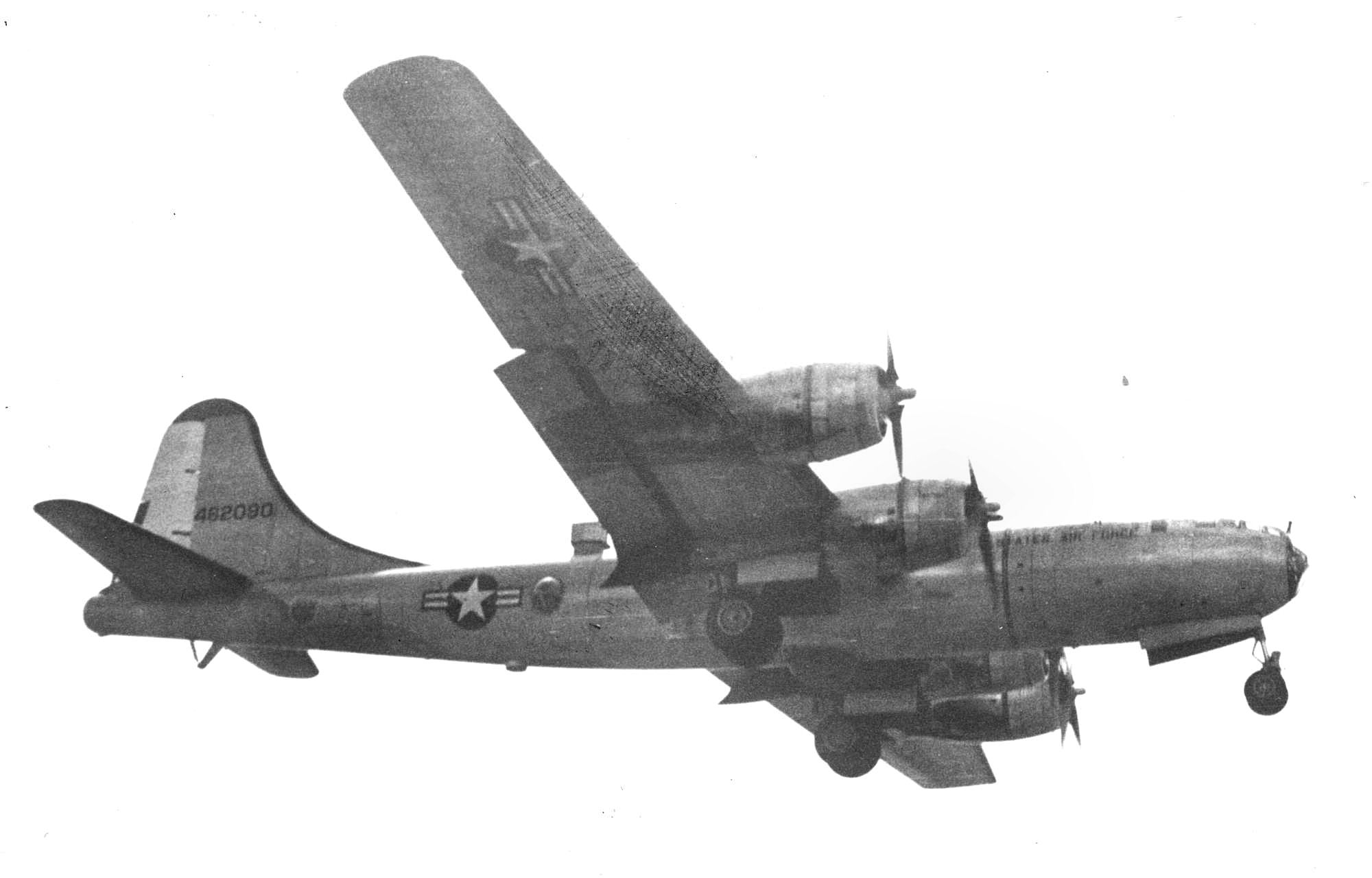
Background of the Air Raids: In the spring of 1945, in the final stages of the Pacific War, the Allies launched a massive bombing and patrol campaign through the US 5th Air Force (5th Air Force) with the aim of cutting off Japanese supply routes in the southern Korean Peninsula and isolating the home islands. At the time, the 5th Air Force belonged to the Far East Air Forces (FEAF) under MacArthur and sortied from bases in the Philippines and Okinawa to attack the southwestern region of the Korean Peninsula under Japanese occupation. (https://aircrewremembered.com/USAAFCombatOperations/Aug.45.html#:~:text=and%20transport%20targets%20all%20over,claim%2010%20Japanese%20planes%20downed) Records remain of US reconnaissance aircraft photographing the skies over the Korean Peninsula from April (for example, reconnaissance photos taken by the US military over Gyeongseong in January 1945), and based on these, precision bombing plans for military targets within the Korean Peninsula were drawn up. Although Hampyeong-gun was not a major city, it was included in the US operational maps as a strategic point through which the Honam Line railway passed. In particular, the area around Hampyeong’s Hakdari Station was a transportation junction where the Honam Line main line and a branch line (the Hampyeong Line) diverged, and it drew the air force’s attention because it had a water tower facility used by the Japanese military to transport war materiel.
Reference: USAAF Worldwide Operations Chronology
Development of the Air Raids: From April to August 1945, bombers (B-24, B-25, etc.) and fighters (P-51 Mustang, P-47 Thunderbolt, etc.) under the US 5th Air Force sortied multiple times over the South Jeolla region, including Hampyeong. The main targets were military trains, railway facilities, materiel depots, and small ships passing along the coast. According to the US combat logs, strafing and bombing of Japanese ships moving along the southwestern coast began in the April–June period, sinking several transport vessels (https://aircrewremembered.com/USAAFCombatOperations/Aug.45.html#:~:text=and%20transport%20targets%20all%20over,claim%2010%20Japanese%20planes%20downed )(https://aircrewremembered.com/USAAFCombatOperations/Aug.45.html#:~:text=and%20Korea%3B%20the%20aircraft%20claim,ground%20forces%20in%20or%20near ). Subsequently, in July–August, large-scale air operations sortieing from Okinawa bases were carried out, delivering concentrated strikes against the railway network and harbor facilities of the southern Korean Peninsula. For example, on August 13, 1945, a formation of US Army Air Forces B-24 and B-25 bombers out of Okinawa bombed the waters off the western coast of Korea, sinking or heavily damaging several ships, while a formation of P-47 fighters engaged some 20 Japanese fighters that had sortied from the skies over Gyeongseong (Seoul), shooting down 16 of them (https://pacificwrecks.com/date/1945/08/13.html#:~:text=,61s). In this way, the US 5th Air Force seized air and sea superiority over the southwestern region of Korea, including Hampyeong, and focused on collapsing the Japanese military’s supply routes.
Reference: The US Pacific Wrecks database
Reference: USAAF Worldwide Operations Chronology
Effects of the Air Raids: The military effect of the US air raids was revealed through changes in the deployment and behavior of the Japanese military in the Hampyeong area. First, as Allied aircraft appeared constantly, the Japanese military camouflaged and dispersed its existing defensive strongpoints. It is said that the Japanese troops at Eomda Elementary School also avoided exposure as much as possible during the day, dispersed their positions into the surrounding forests and covered shelters, and carried out large-scale unit movements or supply transport only at night. US bombing destroyed bridges and several sections of track on the Honam Line, frequently disrupting train operations passing through Hampyeong (https://aircrewremembered.com/USAAFCombatOperations/Aug.45.html#:~:text=and%20Korea%3B%20the%20aircraft%20claim,ground%20forces%20in%20or%20near). As a result, the supply of ammunition and logistics materiel to the Japanese military was delayed, and various war materials had to be moved to safe areas or stored in dispersed locations. Indeed, Allied records such as the Combat Chronology mention achievements in July–August such as “32 bridges destroyed, railroads blockaded” at various points in the South Korean railway network (https://en.wikipedia.org/wiki/United_States_Air_Force_in_South_Korea#:~:text=With%20both%20American%20strategic%20and,9). The Hampyeong Line branch also ceased operating, leaving the unit stationed in Eomda-myeon isolated and forced to rely on local procurement for its remaining supplies.
Reference: USAAF Worldwide Operations Chronology
Reference: Wikipedia
Civilian Damage and Response: The Allied air raids inflicted damage not only on areas with concentrated military facilities but also on rural residents. There is testimony that a steam locomotive operating near Hampyeong’s Hakdari Station was hit by US aircraft, destroying the locomotive and freight cars. Fortunately, no large-scale civilian casualties were reported. As the air raids continued, the Japanese authorities forced evacuation procedures on the residents of Hampyeong. They organized air-raid warning networks in each village, and when aircraft movements were detected, they sounded a “droning sound” (air-raid siren) to evacuate residents to air-raid shelters. Because the Hampyeong area did not have air-raid shelters of sufficient urban scale, residents dug pits in the nearby hills or paddy banks to hide. As the air raids intensified in August, the Japanese military effectively gave up using the railways and roads and resorted to transporting supplies by small vehicles or by manpower, and even in this process there was the threat of aircraft strafing, which greatly constrained their movements.
Reference: Oral testimony about the bombing (https://lovemewithoutall.github.io/history/World-War2-of-grandfather/ )
The Air Raids and the Last Days of the Japanese Military: Amid the continuous bombing by the US 5th Air Force and the pressure of the Soviet Union’s entry into the war, the fighting spirit of the Japanese military in the Hampyeong area rapidly weakened. When news of Japan’s surrender was conveyed on August 15, the remaining Japanese troops at Eomda-ri gave up the fight, gathered at the nearby township office, and prepared to surrender. The Japanese chain of command, thrown into confusion by the air raids, temporarily restored order after the surrender in order to maintain local public safety and recover weapons, and the disarmament of the Japanese military in the Hampyeong area was carried out without major clashes. It took a considerable amount of time after liberation to repair the railways and facilities destroyed by US bombing. The US strategic bombing is assessed as a factor that accelerated the surrender of the Japanese military throughout Korea, including Hampyeong (https://pacificwrecks.com/date/1945/08/13.html#:~:text=,61s). The residents of Hampyeong who suffered air-raid damage and the conscripted Korean laborers returned home after liberation and dealt with the damage, and most of the Japanese military positions and facilities hastily built in the late colonial period were dismantled, so that today only some modern relics, such as the Hakdari Station water tower, testify to that time.
Reference: The US Pacific Wrecks database (https://pacificwrecks.com/date/1945/08/13.html )
Conclusion
Looking at the Japanese military garrison and the pattern of US Air Force air raids at Eomda-ri, Eomda-myeon, Hampyeong-gun in the final phase of the Pacific War, we can see that part of the Japanese 150th Division was stationed for regional defense, mobilizing even school facilities, but suffered from supply-route interdiction and declining morale in the face of the Allies’ overwhelming air superiority. From April to August 1945, the US 5th Air Force carried out thorough bombing and strafing operations over the South Jeolla region, including the Hampyeong area, destroying numerous military targets (https://pacificwrecks.com/date/1945/08/13.html#:~:text=,61s) and thereby neutralizing the Japanese military’s capacity for delaying warfare. As a result, the Japanese military stationed in Hampyeong met defeat without ever once engaging the Allied forces, withdrew and surrendered, and left damage both large and small to local lives and facilities. These facts were confirmed by comprehensively analyzing oral testimony and US military records. The Hampyeong case serves as a cross-section showing the late-war Japanese garrison situation in the southern Korean Peninsula and the impact of Allied aerial attacks, and it becomes an important historical example for understanding the realities of the military and civilian life in Korea just before the end of World War II.
Reference: Japan Center for Asian Historical Records (https://www.jacar.go.jp/english/glossary_en/term/0100-0040-0060-0010-0010-0020.html)
Reference: The US Pacific Wrecks database (https://pacificwrecks.com/date/1945/08/13.html )
Reference Materials
- Japan Center for Asian Historical Records (https://www.jacar.go.jp/english/glossary_en/term/0100-0040-0060-0010-0010-0020.html)
- “History of Hampyeong-gun” (『함평군사』) (https://www.dbpia.co.kr/journal/articleDetail?nodeId=NODE09881906 )
- 《Combat Chronology of US Army Air Forces 1941-45》 (https://www.govinfo.gov/content/pkg/GOVPUB-D301-PURL-LPS48331/pdf/GOVPUB-D301-PURL-LPS48331.pdf )
- The Official Chronology of the US Navy in World War2: 1945 (https://www.ibiblio.org/hyperwar/USN/USN-Chron/USN-Chron-1945.html )
- The US Pacific Wrecks database (https://pacificwrecks.com/date/1945/08/13.html )
- USAAF Worldwide Operations Chronology (https://aircrewremembered.com/USAAFCombatOperations/Aug.45.html)
- Oral testimony about the bombing (https://lovemewithoutall.github.io/history/World-War2-of-grandfather/ )
- Today Gwangju Jeonnam (https://www.todaygwangju.com/news/articleView.html?idxno=166053#:~:text=UPDATED.%202025)
EOD
20250513
Leave a comment